|
Prof.
David K. Gifford
David Gifford develops new machine learning techniques and algorithms
to model the transcriptional regulatory networks that control gene
expression programs in living cells. Our group has a very productive
interdisciplinary collaboration with leading biologists that has
allowed us to tackle extraordinarily difficult and interesting
problems that underlie cellular function and development.
Current work in our laboratory is examining how we can computationally model
chromatin modifying complexes that are associated with the genome of
living yeast cells. New kinds of mechanistic computational models are
necessary to capture how chromatin structure encodes cellular memory,
and how the state of this memory is used to control gene
expression. In particular, we are investigating new modular graphical
models that use mechanistic constraints to describe biological
mechanism.
A new focus is an interdisciplinary project that seeks to
build computational models of the transcriptional regulatory networks
that control the differentiation of specific cell types. Elucidating
these regulatory networks will enable us to define the regulatory
processes that determine a cell's progress to its terminally
differentiated state, and position us to differentiate embryonic stem
(ES) cells for the treatment of debilitating human diseases. New
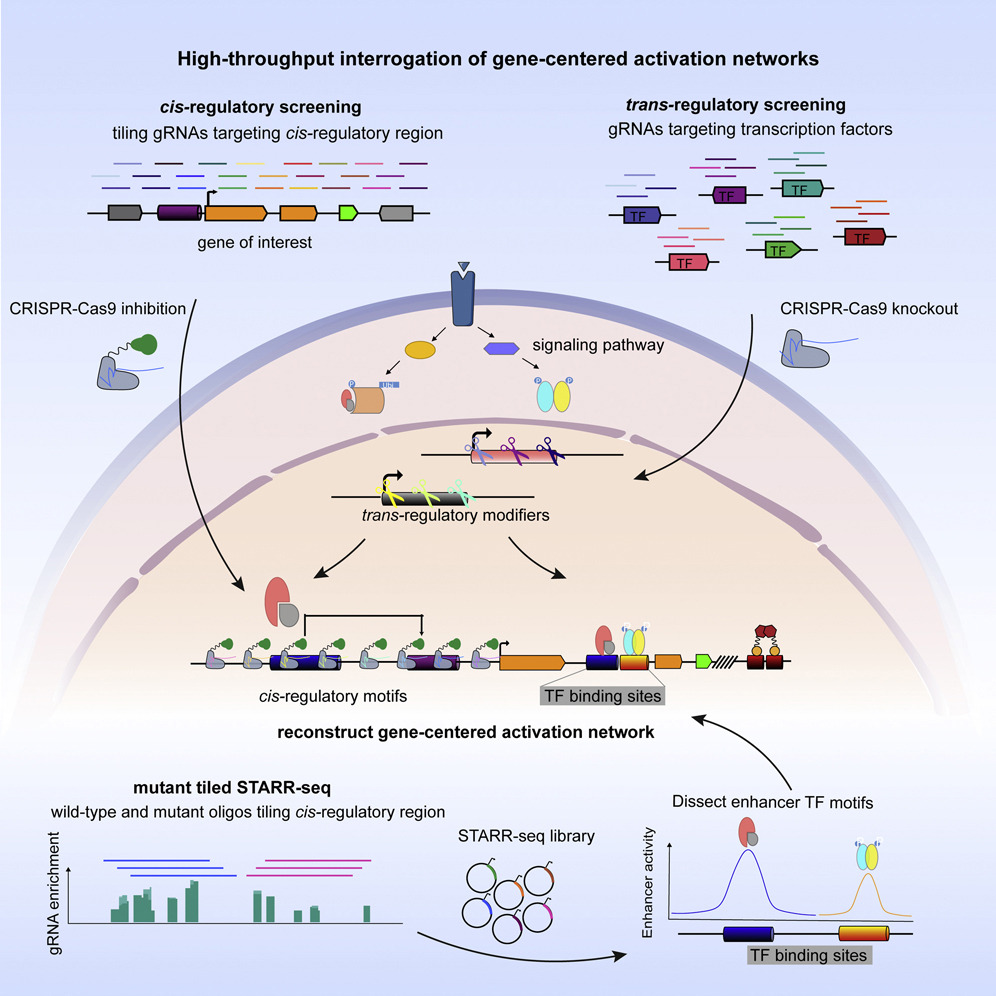
computational techniques for elucidating transcriptional regulatory
networks based on the integration of diverse high-throughput
experimental data (genome sequence, chromatin structure, transcription
factor-DNA binding, gene expression) provide a powerful foundation for
discovering the detailed mechanisms of regulatory network control of
cell differentiation during development.
|